
Hammamet, April 2026
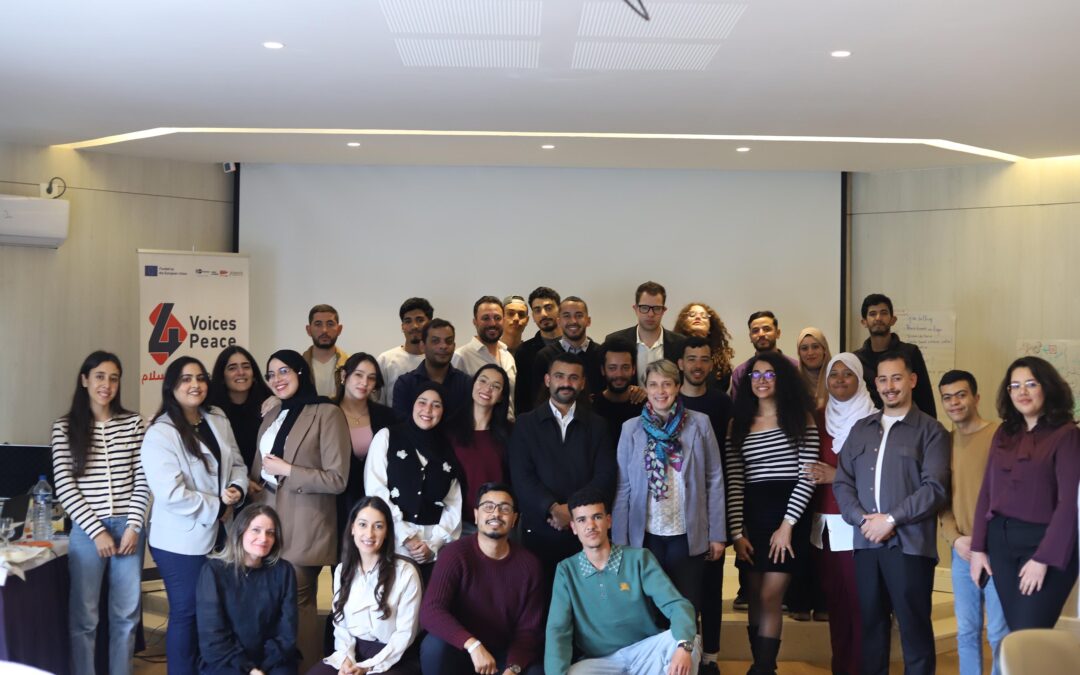
Since its launch, the Voices4Peace programme has stood as a powerful initiative rooted in a simple yet urgent belief: young people are not merely consumers of information — they are active shapers of narratives, communities, and, ultimately, peace. In April 2026, this vision came to life through an intensive 4-day bootcamp held in Hammamet, bringing together a new generation of Tunisian youth committed to building a more informed, inclusive, and resilient society.
Funded by the European Union and implemented in partnership with DW Akademie (DWA) and Drabzeen Media Academy as part of the MIL4Peace project. The programme equips participants with the tools, skills, and mindset needed to navigate and transform today’s rapidly evolving media landscape. Through a combination of media and information literacy (MIL), peacebuilding, and digital content creation, it enables young people to become active agents of positive change within their
communities, at a time when misinformation spreads rapidly and online spaces are increasingly polarised.
Building Skills for Impact
The event brought together 30 participants from diverse backgrounds for an immersive learning experience focused on critical thinking, fact-checking, and responsible storytelling. Over the course of the bootcamp, participants explored how to analyse media content, detect misinformation, and understand the broader impact of digital narratives on social cohesion and public discourse.
The programme went far beyond theory. Through hands-on production labs, participants developed practical skills in fact-checking, creative media, and digital campaigning; learned how to craft compelling stories; and experimented with digital tools tailored for social media platforms, particularly in the age of artificial intelligence. This blend of analytical and creative training equipped them not only to understand the challenges of today’s information ecosystem, but also to actively respond to them.
Central to the experience was a participatory and collaborative approach. Participants worked in teams, exchanged perspectives, and engaged in discussions on pressing societal issues, fostering both personal growth and collective awareness.
Advancing Media Literacy and Safer Digital Spaces: Insights from the EU and DW Akademie
During the event, Ehab Zaarour, DWA Consultant, presented the organisation’s holistic approach to combating disinformation and online violations. He outlined how DW Akademie addresses these challenges from multiple angles, including strengthening the capacities of key actors and providing practical tools to those actively engaged in countering information disorder. Zaarour also highlighted DWA’s investments in building media and information literacy skills through projects implemented across different regions worldwide.
A key highlight of his address was the introduction of the upcoming Media and Information Literacy (MIL) Platform, which will bring together educational materials produced by DW Akademie alongside content from like-minded organisations, including the European Union, the United Nations, and other partners in a single, freely accessible online space for teachers, students, and stakeholders working on MIL. He concluded by expressing appreciation for the long-term trust and partnership of EU donors, reaffirming a shared commitment to contributing to a world with fewer online violations, reduced information disorder, and stronger youth engagement across all project countries.
“We aim to empower young people like yourselves to take a stronger role in fighting disinformation and online violations, by equipping you with the right skills and tools, and by ensuring that you have the protection needed to be active and confident.”
Ehab Zaarour, DW Akademie Consultant
Speaking on behalf of the European Union, Ilaria Mussetti, FPI Regional Cooperation Attachée — Maghreb, highlighted the EU’s strong commitment to advancing Media and Information Literacy as a key response to cyberbullying, online harassment, and the spread of disinformation. She emphasised that MIL plays a crucial role in strengthening democratic resilience, digital citizenship, and social cohesion, particularly in increasingly complex and fast-moving information environments.
Mussetti drew attention to the growing influence of artificial intelligence on the way misinformation and online harm are produced and amplified, underscoring the importance of equipping citizens especially young people with the practical skills needed to critically assess, create, and share information responsibly. She also highlighted the broader value of the bootcamp:
“It is not only about identifying misinformation; it is about protecting people, preserving dignity, and strengthening communities. It is about ensuring that digital spaces can be places where everyone — especially women and young
people — can participate without fear.”Ilaria Mussetti, EU Regional Cooperation Attachée – Maghreb
She concluded by reaffirming the European Union’s long-term commitment to supporting initiatives that
promote safer digital spaces, protect vulnerable groups, and foster peace and constructive engagement
across the project countries.
Looking Ahead
As digital campaign ideas take shape and participants continue their journey beyond the bootcamp, the impact of Voices4Peace is set to extend far beyond Hammamet. Each initiative launched, each story shared, and each conversation sparked represents a step toward building a more inclusive and peaceful society beginning in Tunisia, with the potential to resonate on a global scale.
The programme reminds us that when young people are given the tools, trust, and space to lead, they
do not simply adapt to the world, they reshape it.